Festive Mind, Celebrating & Letting Go Time: The Festive Season In India & Mental Health
India’s festive season arrives each year like a colorful wave that sweeps through streets, hearts, and homes. From the flickering diyas of Diwali to the grand effigies of Dussehra, from the rhythmic beats of Garba during Navratri to the gentle glow of Christmas candles, the months of October to January carry a certain electricity in the air. It is a time when markets overflow with sweets and sarees, families reunite, and joy feels almost tangible. Yet, beneath this glittering surface lies another reality, one that speaks of mental and emotional undercurrents that often go unnoticed. The festive season, though radiant and meaningful, can also be psychologically complex. It holds within it the potential for both emotional rejuvenation and hidden strain.
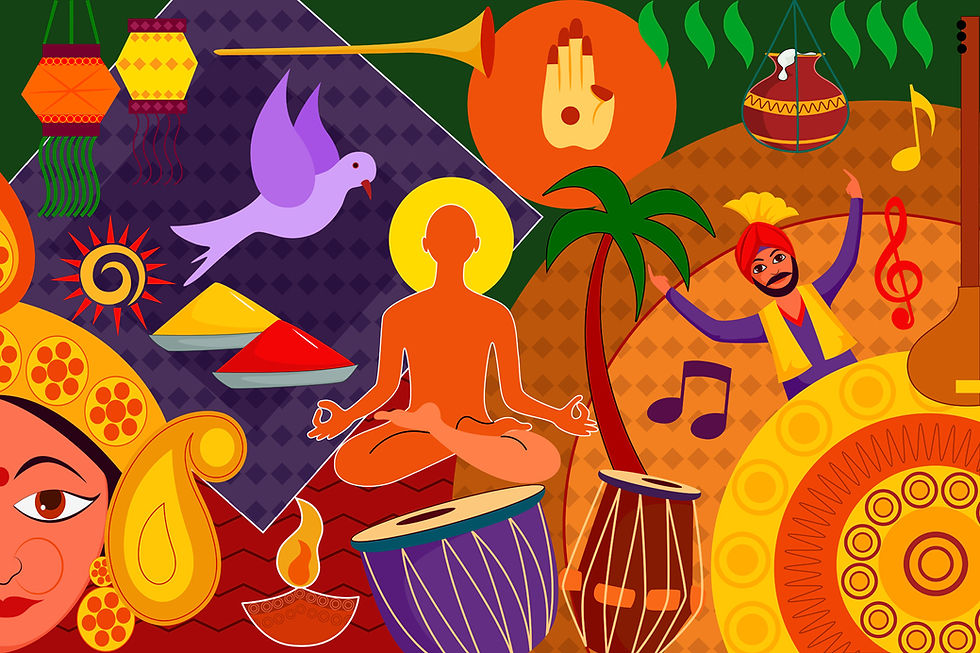
Festivals in India are more than events on a calendar; they are cultural anchors that define the rhythm of life. They symbolize renewal: the triumph of good over evil in Dussehra, the return of light in Diwali, the harvest and gratitude of Pongal and Lohri, and the unity of faiths in Eid and Christmas. From a psychological perspective, such symbolism provides meaning, which is essential for mental well-being. Human beings are storytellers by nature; we understand our lives through metaphors and narratives. When people light diyas, burn effigies of Ravana, or decorate homes, they are not merely performing rituals, they are participating in a collective story of hope, resilience, and moral victory. This shared sense of purpose strengthens social identity and belonging, key elements in emotional stability and happiness.
However, modern life has transformed the way festivals are experienced. Where once they centered on community and connection, today they are increasingly influenced by consumerism, digital display, and social comparison. Social media floods with images of perfectly decorated homes, designer outfits, and elaborate celebrations. The implicit message becomes: happiness must look a certain way. This can create a subtle psychological pressure, the sense that one must feel cheerful, social, and prosperous, even if one does not. Psychologists call this phenomenon “emotional dissonance,” the gap between how one feels and how one is expected to feel. During the festive season, this gap can widen, leading to anxiety, fatigue, or a quiet sense of inadequacy.
Moreover, the months leading up to major festivals can be physically and mentally exhausting. Planning, shopping, hosting, and attending numerous events can lead to what psychologists term “festive burnout.” The endless list of tasks may seem joyful at first, but when combined with financial stress or work-life imbalance, it can quickly drain emotional energy. Ironically, a season meant for joy and togetherness can leave people feeling scattered and overwhelmed. This paradox has become especially visible in urban India, where the speed of life leaves little space for rest or reflection, even during festivals that once symbolized pause and renewal.
Yet, within the same season lies immense potential for emotional healing. Festivals, by design, bring people together. They remind individuals that they are part of something larger than themselves- a family, a culture, a lineage of traditions. The act of preparing for guests, exchanging gifts, or sharing food triggers what psychologists call “prosocial behavior,” actions that nurture empathy, bonding, and gratitude. These behaviors have been shown to boost serotonin and oxytocin (the brain’s happiness and connection chemicals). The laughter shared over sweets, the collective prayer before a meal, or the music and dance of Navratri are not trivial pleasures; they are emotional rituals that strengthen resilience.
Still, it is important to recognize that the festive season is not equally joyful for everyone. For some, it can highlight absence, the loss of loved ones, strained relationships, or personal challenges. The bright lights and noise of celebration can amplify loneliness. This is why mental health awareness becomes especially vital during this period. In India, conversations about emotional well-being are still evolving, but the festive season provides an opportunity to reframe these dialogues. Instead of asking only, “How are you celebrating?” we might begin asking, “How are you feeling?” Small gestures such as inviting someone who lives alone, checking in on a friend, offering to share a meal can carry enormous emotional significance. Festivals are meant to bring light into darkness, and sometimes that light must be directed toward those who need it most.
From a psychological standpoint, festivals can also serve as opportunities for introspection. Every celebration, whether Dussehra’s burning of Ravana or Diwali’s lighting of diyas carries an inner metaphor. The demons of Dussehra may represent not only mythic evil but also our personal shadows: anger, jealousy, fear, or resentment. Lighting a diya can be seen as illuminating one’s own awareness, choosing mindfulness over mental clutter. If approached consciously, festivals can become annual moments of self-renewal. They invite us to let go, not just of old clothes or home dust, but of emotional residue accumulated through the year.
The challenge, then, lies in finding balance: to celebrate without overextending, to connect without comparison, to enjoy without losing peace. This balance is the essence of psychological well-being. It can be cultivated through simple practices such as setting boundaries around commitments, spending quiet time in reflection, being present in rituals instead of rushing through them. Mindfulness during the festive season transforms ordinary moments into meaningful experiences. Watching a flame flicker, listening to devotional music, or simply breathing in the scent of incense can become acts of grounding in a season otherwise filled with motion.
Ultimately, India’s festivals remind us of a timeless truth, that joy and reflection can coexist. The noise, color, and energy of celebration are not meant to drown out introspection but to complement it. Just as every diya shines brighter against the night sky, our inner light gains meaning when it emerges from moments of quiet understanding. The festive season is, therefore, not only a cultural phenomenon but also a psychological one, a mirror that reflects both our exuberance and our need for peace. In learning to honor both, we discover that the real festival is not outside us but within: the steady flame of awareness, compassion, and connection that continues long after the fireworks fade.
Written by: Neharika Chhabria
#MentalHealth #SelfLove #Wellbeing #MindMatters #YouMatter #Wellness #Psychology #Motivation #SelfCare #BeKindToYourMind #Festivities #Festivals #FestivalsOfIndia #Celebrations #Diwali #Navratri #GudiPadwa #Dussehra #NewYear #HappyDiwali #Dhanteras #GaneshChaturthi #Garba #Christmas #Mindfulness #Boundaries
September, 2026